
Before pursuing a forklift operator job, it helps to understand how much you could earn, what affects your pay, and what employers expect from qualified candidates. Forklift operators work in warehouses, manufacturing facilities, distribution centers, and other workplaces where materials need to be moved safely and efficiently.
So, how much do forklift operators make in the United States? The answer depends on your location, experience, industry, work schedule, and the type of equipment you operate.
According to 2025 wage data from the U.S. Bureau of Labor Statistics (BLS), industrial truck and tractor operators earned a median annual wage of $46,420, equivalent to approximately $22.32 per hour. This occupational category includes forklift-related jobs, although it also covers some other types of industrial truck operators.
At Get OSHA Courses, workers can explore workplace safety training resources to help them understand safety requirements for different industries.
In this guide, we will explore forklift operator salary ranges, starting pay, factors that influence earnings, job responsibilities, and the training needed to enter this field.
What Do Forklift Operators Do?
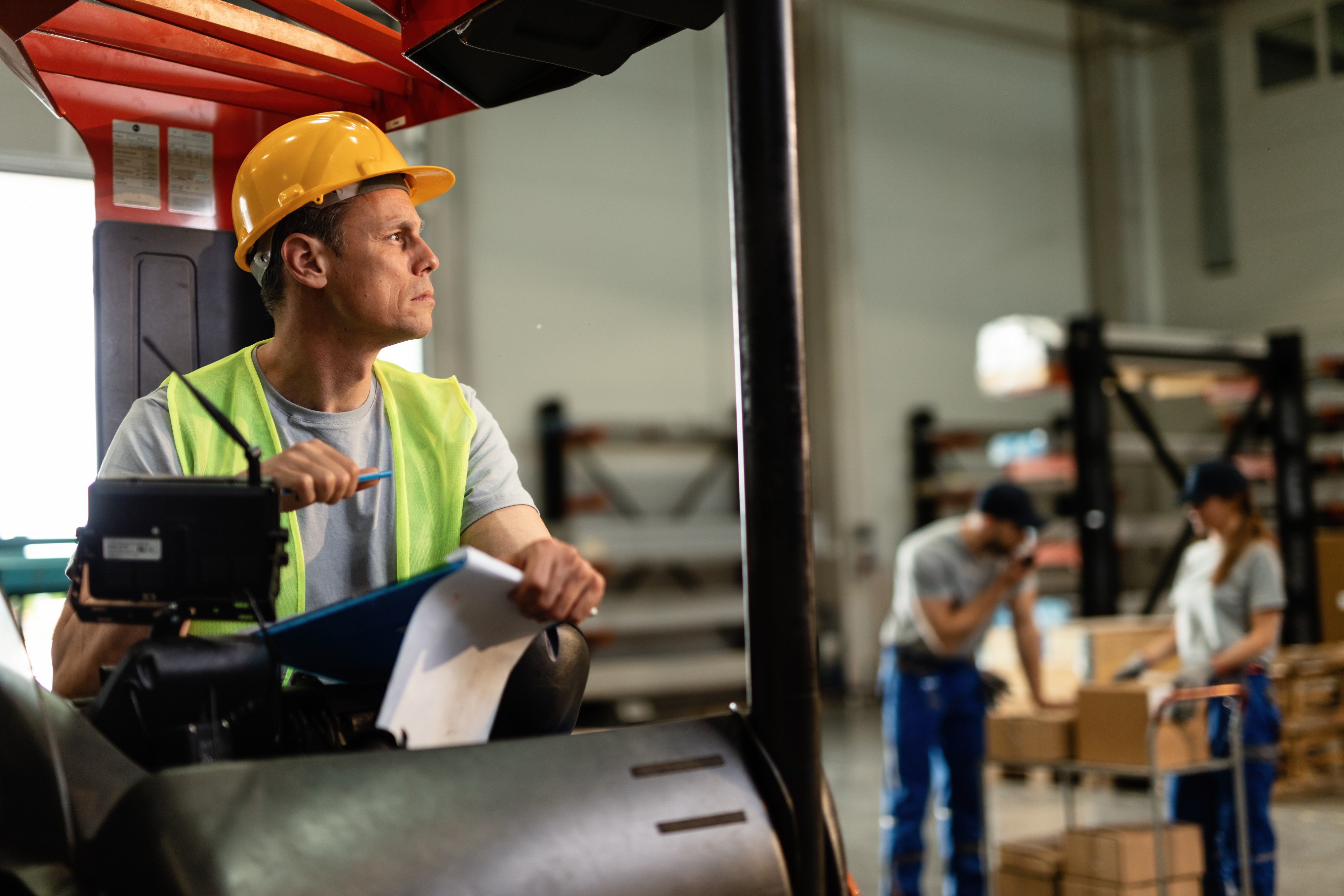
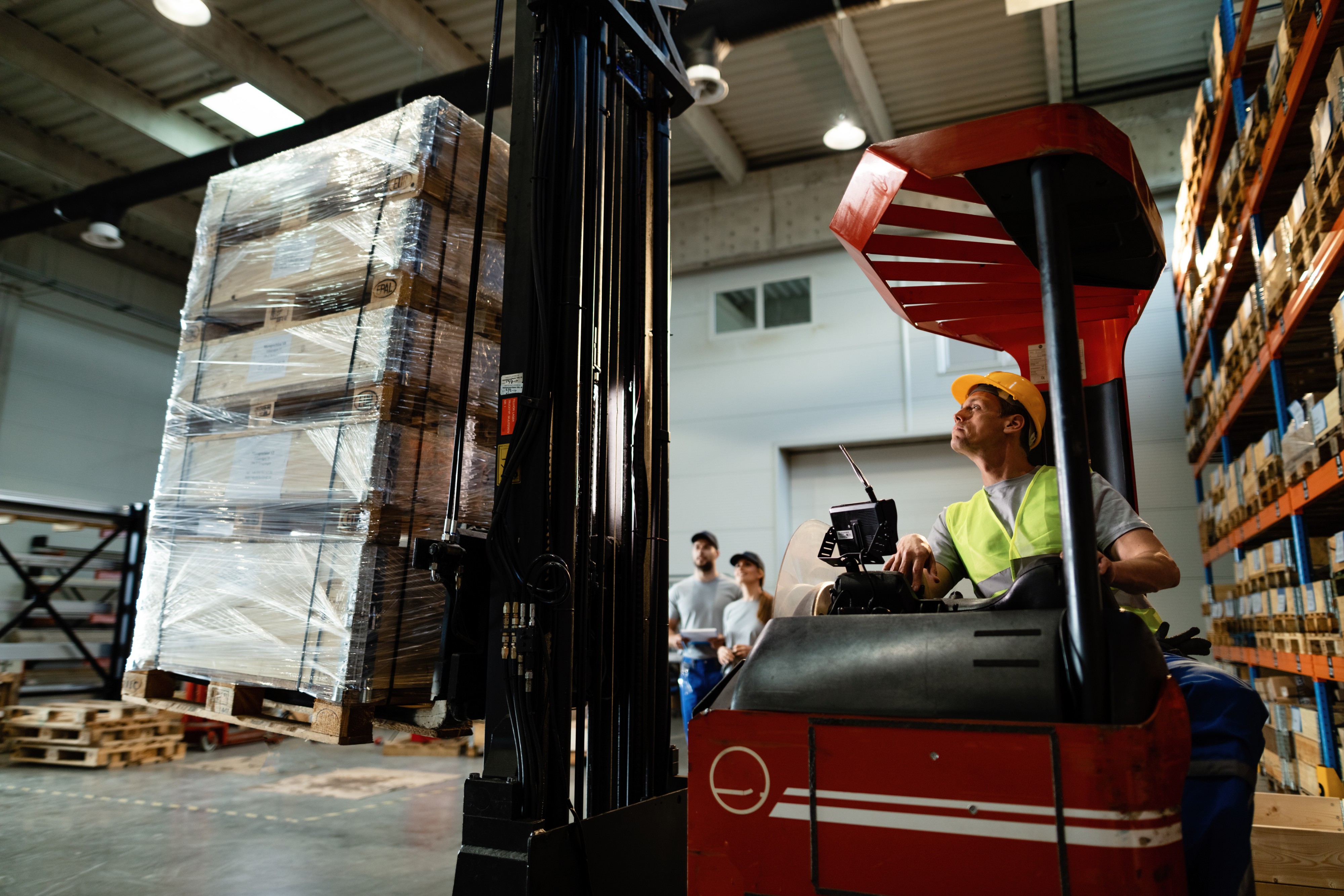
Forklift operators use powered industrial trucks to lift, transport, stack, and organize materials. Their work helps businesses move products between storage areas, loading docks, production lines, and delivery vehicles.
Common responsibilities include:
-
Loading and unloading trucks, trailers, and shipping containers.
-
Moving pallets and materials throughout warehouses and factories.
-
Stacking products in designated storage locations.
-
Inspecting forklifts before use and reporting mechanical problems.
-
Following workplace safety procedures and load-handling requirements.
-
Checking inventory labels and ensuring materials reach the correct destinations.
-
Communicating with warehouse staff, supervisors, and other equipment operators.
The exact responsibilities depend on the workplace. A forklift driver in a distribution center may focus on moving inventory, while an operator at a manufacturing facility may transport raw materials and finished products.
Because forklifts handle heavy loads in busy work environments, operators need good situational awareness, attention to detail, and the ability to follow safety instructions.
How Much Do Forklift Operators Make?
Forklift operator pay varies across the country, but national wage data provides a useful starting point.
According to O*NET's national wage data for industrial truck and tractor operators, based on BLS 2025 wage statistics, the national wage distribution is as follows:
| Wage measure | Annual pay | Hourly equivalent |
|---|---|---|
| Lower 10% of earners | $36,840 or less | $17.71 or less |
| 25th percentile | $40,030 | $19.24 |
| Median wage | $46,420 | $22.32 |
| 75th percentile | $54,770 | $26.33 |
| Upper 10% of earners | $62,520 or more | $30.06 or more |
These figures are national benchmarks, not guaranteed salaries for every forklift operator. Individual job offers may fall below or above these amounts depending on the employer, location, shift, experience, and specific duties.
It is also important to understand the difference between average and median pay. The median represents the middle point in the wage distribution: half of workers earn more, and half earn less.
What Is the Starting Pay for a Forklift Operator?
Starting pay for a forklift operator depends on the employer and the responsibilities of the position. Entry-level warehouse jobs may offer lower wages than positions requiring previous equipment experience, specialized material-handling skills, or work in demanding industrial environments.
New operators may begin with general warehouse duties while learning inventory procedures, equipment inspections, and safe material handling. Employees who demonstrate reliability and develop practical operating skills may become eligible for better-paying opportunities.
When comparing entry-level offers, look beyond the advertised hourly rate. Consider overtime availability, shift differentials, paid training, benefits, and opportunities for advancement.
A job offering slightly less per hour may still be attractive if it provides consistent hours and a clear path toward more specialized work.
How Much Do Forklift Drivers Make Per Hour?
Forklift driver pay is often advertised as an hourly wage, particularly for warehouse, manufacturing, and distribution jobs.
Using the national median of $22.32 per hour as a reference, a full-time employee working 40 hours per week for 52 weeks would earn approximately $46,426 annually before taxes, assuming consistent hours and no unpaid time off.
Actual earnings can differ because some workers have variable schedules, seasonal employment, overtime, or unpaid leave.
Before accepting a position, confirm whether the advertised pay is hourly or salaried and whether overtime is available or applicable to the job.
What Factors Affect Forklift Operator Salary?
Two people operating similar equipment can earn different wages. Several factors help explain why forklift operator pay varies.
1. Location
Geographic location is an important consideration when comparing forklift driver wages. Employers in different states and metropolitan areas face different labor markets, living costs, and demand for warehouse workers.
A forklift operator in a major distribution hub may receive a different offer from someone performing similar duties in a smaller market.
Compare wages in the specific city or state where you intend to work rather than relying entirely on national averages.
2. Experience
Experience can help operators qualify for positions involving more complex equipment, larger loads, specialized inventory systems, or greater responsibility.
New employees may need time to learn workplace procedures and demonstrate safe operating habits. Experienced operators may have an advantage when applying for jobs that require a proven record of equipment operation.
However, experience does not automatically guarantee a higher salary. Employer requirements, available positions, and local labor conditions also matter.
3. Industry
Forklift operators work across several industries, including:
-
Warehousing and distribution.
-
Manufacturing and production.
-
Wholesale trade.
-
Transportation and logistics.
-
Construction supply and building materials.
-
Ports and freight-handling facilities.
Each industry has different operational requirements. Some positions involve routine pallet movement, while others require experience handling specialized loads or working around complex machinery.
The national industrial truck and tractor operator wage category includes workers across multiple industries, so its figures should not be treated as the exact salary for every sector.
4. Shift and Overtime
Some warehouses and factories operate around the clock. Evening, overnight, weekend, or holiday shifts may offer different pay arrangements depending on the employer.
Overtime can also increase total earnings when additional hours are available and the employee qualifies for overtime pay under applicable law.
Ask employers about regular working hours, overtime policies, shift premiums, and whether the position is seasonal or permanent.
5. Equipment and Job Responsibilities
The type of equipment and work being performed may influence hiring requirements and compensation.
For example, employers may seek different skills for counterbalance forklifts, reach trucks, order pickers, and other powered industrial trucks.
Additional responsibilities, such as inventory control, loading coordination, or operating in specialized facilities, may also affect a job offer.
How Do You Become a Forklift Operator?
Becoming a forklift operator can be a practical career option for people interested in warehouse, logistics, manufacturing, or material-handling work.
You do not necessarily need a college degree, but employers may require a high school diploma or equivalent, depending on the position.
A typical path into the occupation includes the following steps.
Step 1: Find Entry-Level Opportunities
Search for warehouse associate, material handler, shipping and receiving, or entry-level forklift operator positions. Some employers hire candidates with little experience and provide job-specific training.
Review job descriptions carefully to identify minimum age requirements, physical demands, work schedules, and any prior experience needed.
Step 2: Complete the Required Forklift Training
In the United States, OSHA's powered industrial truck standard requires employers to ensure that operators receive appropriate training and demonstrate the necessary skills before operating equipment independently.
Training covers relevant operating principles, workplace hazards, and safe practices. It must be appropriate for the truck type and workplace conditions.
An online forklift safety course can help with the formal instruction component, but online coursework alone does not satisfy every practical training and evaluation requirement.
Step 3: Complete Practical Training and Evaluation
Operators must receive hands-on training and demonstrate their ability to operate the equipment safely under the applicable OSHA requirements.
The employer must ensure that the operator is evaluated by a qualified person and that the required certification records are maintained.
Training and evaluation requirements are specific to the equipment and workplace. Operators may need additional training when conditions change or when an observed unsafe practice indicates that refresher training is necessary.
Step 4: Explore Workplace Safety Training
Forklift-specific training is distinct from broader occupational safety courses. If you are also looking to expand your workplace safety knowledge, explore our OSHA 30-Hour training course to learn about occupational hazards, hazard prevention, and workplace safety responsibilities.
OSHA 30-Hour training does not replace the equipment-specific practical training and evaluation required for forklift operators. Choose training based on your job duties and your employer's requirements.
Step 5: Apply for Jobs and Build Experience
Once you have completed the required training and can demonstrate your skills, apply for suitable positions.
Emphasize safety awareness, reliability, attention to detail, and any relevant warehouse or inventory experience on your resume.
Practical experience can help you qualify for additional responsibilities and future opportunities in material handling and logistics.
Does Forklift Certification Increase Salary?
Forklift training can help candidates meet employer requirements and demonstrate knowledge of safe operating practices. However, certification does not guarantee a particular salary or an automatic pay increase.
Some employers may prefer candidates who have completed relevant training, while others provide the necessary training after hiring.
Your earning potential still depends on factors such as location, experience, job duties, equipment type, and the employer's compensation structure.
It is also important to distinguish between a course completion certificate and the operator training, workplace-specific instruction, evaluation, and certification required under OSHA's powered industrial truck standard.
If you are considering an online course, check what the course covers and understand which practical requirements must be completed through your employer or an appropriate training program.
For the official requirements, consult OSHA's powered industrial truck training guidance.
Is Being a Forklift Driver a Good Career?
Forklift operation can be a good option for people who prefer practical work and want to pursue opportunities in warehousing, manufacturing, distribution, or logistics.
One potential advantage is that many positions do not require a four-year college degree. Employers may value relevant training, safe operating skills, reliability, and experience.
However, the work also has challenges. Operators may spend long periods sitting or standing, repeatedly enter and exit equipment, work around heavy loads, and follow strict safety procedures. Some positions involve overnight shifts, busy loading areas, or physically demanding environments.
Before choosing this career, compare local job openings, pay rates, schedules, benefits, and advancement opportunities.
Potential career progression may include senior forklift operator, warehouse lead, shipping and receiving coordinator, inventory control specialist, or warehouse supervisor, depending on the employer and your additional skills.
Frequently Asked Questions
How much do forklift operators make a year?
The national median annual wage for industrial truck and tractor operators was $46,420 in 2025, according to BLS-based data. Individual forklift operator salaries vary by location, experience, industry, and job responsibilities.
What is the average pay for a forklift operator?
A useful national benchmark is the $22.32 median hourly wage reported for industrial truck and tractor operators in 2025. This broader occupational category includes forklift-related jobs but is not limited exclusively to forklift operators.
How much do forklift drivers make per hour?
Hourly wages vary by employer and location. The national median for the broader industrial truck and tractor operator category was $22.32 per hour in 2025.
Do forklift drivers get paid well?
Whether forklift drivers are paid well depends on local living costs, the offered wage, benefits, working hours, and opportunities for advancement. Comparing several local job listings can provide a clearer picture than relying on a national figure alone.
Do certified forklift operators make more money?
Not necessarily. Relevant training can help candidates meet job requirements, but certification does not guarantee higher pay. Employers may consider practical experience, equipment skills, job duties, and local demand when setting wages.
What are the highest-paying forklift jobs?
Higher-paying opportunities may be found in roles involving specialized equipment, demanding industrial environments, additional responsibilities, or experienced material-handling work. Actual pay varies, so compare current job postings and their requirements before choosing a role.
Do you need a driver's license to operate a forklift?
A regular driver's license is not a universal federal OSHA requirement for operating a forklift on private workplace premises. Employers may have additional hiring requirements, and separate rules may apply when driving on public roads. Operators must still meet applicable age, training, evaluation, and workplace safety requirements.
How long does it take to become a forklift operator?
The time required depends on the training program, equipment type, and the person's progress. OSHA requires appropriate instruction, practical training, and an evaluation of operator performance. There is no single training duration that applies to every operator and workplace.
Final Thoughts
Forklift operator pay depends on much more than the job title. Location, industry, experience, shift schedules, and specific equipment skills can all influence how much you earn.
The 2025 national median wage of $46,420 for industrial truck and tractor operators provides a useful starting point when evaluating forklift-related jobs in the United States. For a more accurate estimate, compare current job listings in your area and review the responsibilities attached to each position.
If you want to pursue this career, focus on appropriate forklift training, practical operating skills, and safe work habits. Understanding both the earning potential and the job requirements can help you make a more informed career decision.
Have Questions About OSHA Training?
Choosing the right safety training can help you prepare for workplace requirements and understand your learning options. If you need help finding the right course or have questions about enrollment, our team is here to help.
Contact our team for assistance with course information, enrollment, and training-related questions.