
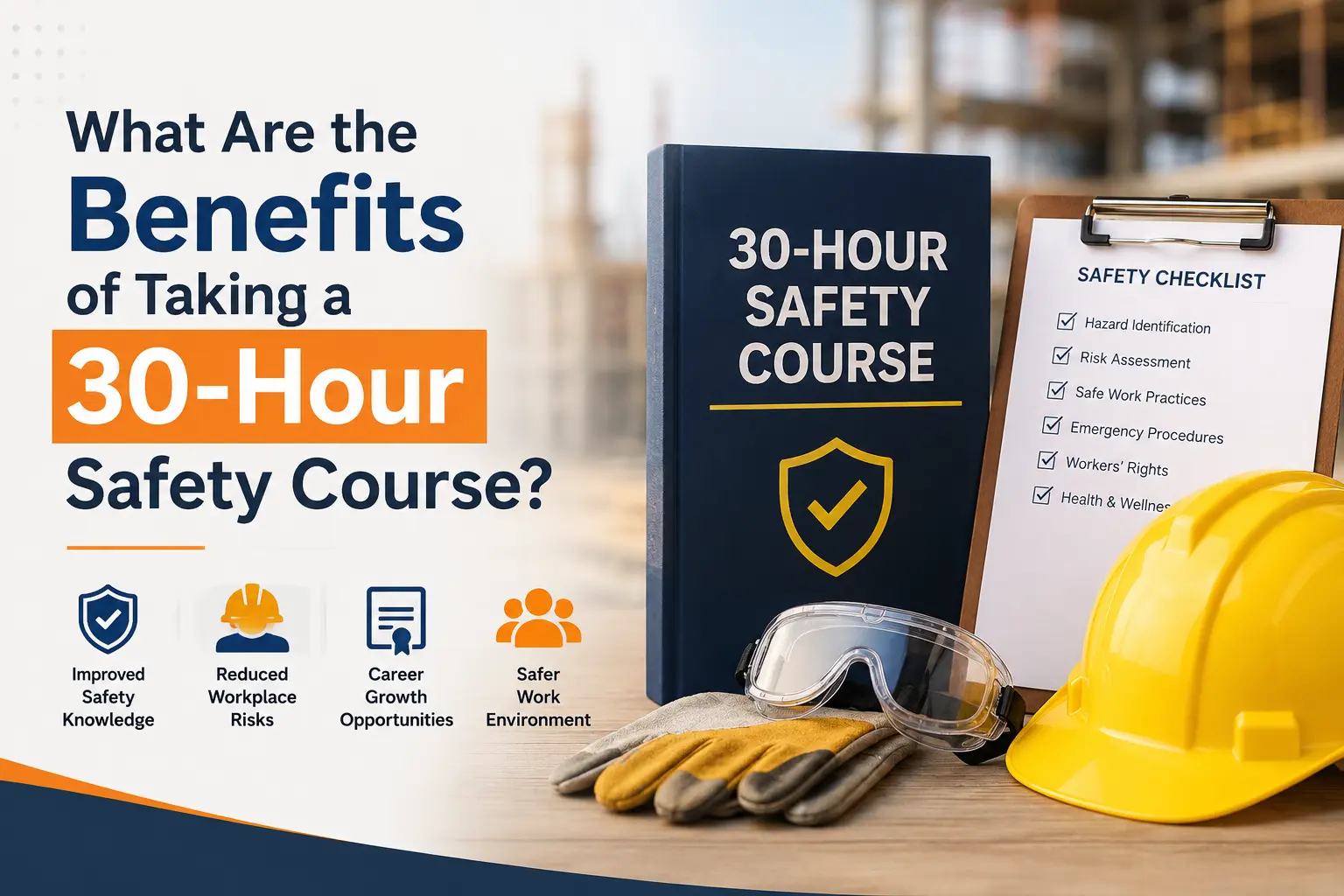
Workplace safety is an important part of every job, particularly in industries where employees regularly work around equipment, hazardous materials, elevated surfaces, or other potential risks. Proper safety education gives workers the knowledge they need to recognize hazards and follow safer work practices.
A 30-hour safety training program provides more extensive education than a basic introductory safety course. It gives participants an opportunity to explore different workplace hazards, prevention methods, protective equipment, and safety responsibilities in greater detail.
For workers, supervisors, and employees with safety-related responsibilities, completing a comprehensive course can be a valuable way to strengthen workplace knowledge and support a safer working environment.
What Is a 30-Hour Safety Course?
A 30-hour safety course is an extended workplace education program designed to help participants understand occupational hazards and appropriate safety practices.
For construction workers, an OSHA 30-hour course may cover topics such as fall protection, electrical safety, scaffolding, excavation, personal protective equipment, hazard communication, and other common construction hazards.
The longer format allows participants to spend more time learning about workplace risks instead of receiving only a brief overview.
The exact topics can vary depending on the industry and course type. Therefore, workers should select training that matches their job responsibilities and employer requirements.

1. Improves Hazard Awareness
One of the main benefits of comprehensive safety education is improved awareness of workplace hazards.
Workers may encounter dangerous conditions every day without immediately recognizing the risks involved. Proper education can help them identify potential problems and understand why certain precautions are necessary.
Common topics may include:
- Fall hazards
- Electrical risks
- Fire hazards
- Hazardous materials
- Unsafe equipment
- Struck-by hazards
- Caught-in or caught-between hazards
- Poor housekeeping
- Emergency situations
- Personal protective equipment
When employees understand these risks, they can be better prepared to identify unsafe conditions and report them to the appropriate person.
Recognizing Risks Before They Cause Problems
Safety awareness is not only about responding to accidents. It also involves recognizing potential hazards before an incident occurs.
For example, a worker who understands fall hazards may notice an unsafe working area and raise the concern before another employee is exposed to unnecessary risk.
2. Encourages Safer Work Practices
Understanding a hazard is only one part of workplace safety. Employees also need to know how to work around those hazards safely.
A comprehensive training program can explain appropriate procedures for different workplace situations. Participants may learn about protective equipment, safe equipment operation, emergency procedures, hazard reporting, and other preventive measures.
This knowledge can help employees make safety-conscious decisions during their daily tasks.
Safety education should always complement the procedures established by an employer. Workers should continue following site-specific instructions and never rely on training alone when performing hazardous work.
3. Supports a Strong Safety Culture
A safe workplace depends on more than individual employees. It requires cooperation between workers, supervisors, managers, and employers.
When employees receive proper safety education, they may become more aware of their role in maintaining a safe work environment.
A strong safety culture encourages employees to:
- Report unsafe conditions
- Follow workplace procedures
- Use required protective equipment
- Communicate safety concerns
- Participate in safety meetings
- Keep work areas organized
- Follow emergency procedures
These habits can help make safety a regular part of workplace operations rather than something considered only after an accident.

4. Helps Supervisors Handle Safety Responsibilities
Safety knowledge can be particularly useful for supervisors, foremen, and employees who oversee workplace activities.
Supervisors may need to communicate safety expectations, identify hazards, monitor work practices, and encourage employees to follow established procedures.
A longer safety course gives these individuals an opportunity to develop a broader understanding of workplace risks.
For someone moving toward a supervisory or safety-related role, additional education can also complement practical experience.
5. Provides Broader Safety Knowledge
One advantage of a longer course is the variety of subjects that can be covered.
A short program may focus on a specific hazard or provide general safety information. A 30-hour course can provide a wider overview of multiple workplace safety topics.
Participants may learn about several areas, including:
- Fall prevention
- Electrical safety
- Hazard communication
- PPE
- Fire prevention
- Material handling
- Scaffolding
- Excavation
- Machine safety
- Workplace health and safety responsibilities
Learning about multiple subjects can help workers develop a more complete understanding of workplace safety.
6. Can Help Meet Training Requirements
Some employers, contractors, and construction projects require employees to complete specific safety education before performing certain duties.
OSHA’s Outreach Training Program includes 10-hour and 30-hour courses. The 30-hour option is generally intended for workers with some safety responsibility, including supervisors and individuals with safety-related duties.
However, it is important to understand the difference between OSHA Outreach training and an OSHA certification. Completing an Outreach course does not make someone “OSHA certified.”
Employers, local authorities, unions, contractors, or specific projects may have additional requirements. Workers should confirm the exact requirements that apply to their position before enrolling.
7. Can Increase Safety Confidence
Having a better understanding of workplace hazards can help employees feel more prepared when dealing with safety-related situations.
For example, a worker who has learned about common construction hazards may be better able to recognize an unsafe condition and know when it should be reported.
Training does not remove workplace risks, and confidence should never replace caution. Instead, the goal is to give workers useful knowledge that supports safer decision-making.
8. May Support Career Development
Safety knowledge can be valuable for employees who want to take on greater responsibilities at work.
Employers often need workers who understand workplace safety and can contribute to maintaining safe operations. Completing a recognized course can demonstrate a commitment to professional development and workplace safety.
For individuals interested in positions such as:
- Foreman
- Site supervisor
- Construction supervisor
- Safety assistant
- Site manager
- Safety-related roles
additional education may complement their existing experience.
A training course cannot guarantee a promotion or new job, but it can be a useful addition to an individual’s professional development.

9. Offers Flexible Learning Options
Depending on the provider, workers may be able to complete a 30-hour safety training program online.
Online learning can be convenient for employees who have demanding work schedules or limited access to classroom-based programs. Participants can complete their coursework from an appropriate location while following the provider’s requirements.
Before choosing an online course, check:
- Provider authorization
- Course content
- Completion requirements
- Training format
- Assessment requirements
- Documentation provided after completion
- Whether the course meets your employer’s requirements
Convenience is useful, but the most important factor is making sure the training is appropriate for your specific needs.
10. Reinforces Important Safety Habits
Safety education can reinforce basic habits that workers should use every day.
These may include inspecting equipment before use, wearing appropriate PPE, keeping work areas organized, following established procedures, communicating hazards, and responding appropriately during emergencies.
Regularly applying these principles can contribute to better safety awareness across a workplace.
Training is most effective when employees apply what they learn to their actual working environment and continue following employer-specific safety policies.
Who Should Take a 30-Hour Safety Course?
A longer safety course may be suitable for:
- Construction workers
- Supervisors
- Foremen
- Site managers
- Employees with safety responsibilities
- Workers seeking broader safety knowledge
- Individuals whose employer or project requires this type of training
The right course depends on the person’s occupation, industry, responsibilities, and applicable workplace requirements.
How to Choose the Right Course
Before enrolling, compare different providers and review their course information carefully.
Look for a program that clearly explains its subjects, provider credentials, completion requirements, and documentation.
If you specifically need OSHA Outreach training, verify that the provider is authorized to deliver the appropriate OSHA Outreach course.
You should also consider whether online or classroom training is better suited to your schedule and learning preferences.
Most importantly, do not select a course based solely on price. Course quality, provider credibility, relevance, and compliance with your employer’s requirements are all important considerations.
Final Thoughts
Completing 30-hour safety training can give workers and supervisors broader knowledge of workplace hazards, preventive practices, emergency procedures, and safety responsibilities.
The benefits go beyond simply completing a training requirement. Better safety knowledge can help employees recognize hazards, communicate concerns, follow appropriate procedures, and contribute to a stronger safety culture.
If your employer or project requires this type of course, confirm the exact requirements before enrolling. Choosing the right program can help ensure that the education you receive is relevant to your role and workplace.
Ready to improve your workplace safety knowledge? Explore a suitable 30-hour course today and take the next step toward safer, more informed work practices.
Frequently Asked Questions
Is a 30-hour safety course worth taking?
For many workers and supervisors, a 30-hour course can be useful because it provides broader safety education than shorter introductory programs. Its value depends on the worker’s role and training requirements.
How long does a 30-hour course take?
The program is designed around approximately 30 hours of training. The actual schedule can vary depending on the provider and whether the course is delivered online or in person.
Is OSHA 30 the same as an OSHA certification?
No. OSHA Outreach training is safety education and does not constitute an OSHA certification or license. Employers and projects may also have separate training requirements.
Can I complete a 30-hour safety course online?
Yes, online options are available from some training providers. Always verify that the course and provider meet the requirements that apply to your job.
Who should consider a 30-hour safety course?
Workers, supervisors, foremen, and employees with safety-related responsibilities may benefit from comprehensive workplace safety education. The appropriate course depends on the individual’s role and industry.