
+1 201 685 9900 | support@getoshacourses.com
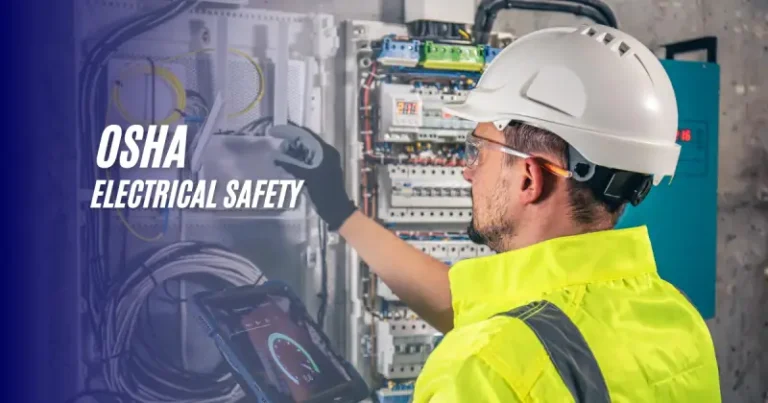
Handling electricity comes with risks. People like engineers and electricians deal with it closely, these fellows deal with overhead lines, cable systems, and even circuits.
Although some might never be seen hanging from the high bridges like a technician, there is a good possibility they will encounter electrical dangers hidden within the office walls.
The Occupational Safety and Health Administration, or OSHA, promises workers safety from many dangers, including electrical ones. In this guide, you will learn to comply with OSHA’s electrical safety regulations and the federal rules regarding them.
Before we get into OSHA’s electrical safety rules, let’s cut through the jargon: What is OSHA, and how does the OSH Act protect workers? (Spoiler: It’s your legal armor against workplace dangers.)
You bet it does. Let’s break it down: OSHA electrical safety standard 1910.332 requires employers to give OSHA electrical safety training to anyone working near electrical risks—no exceptions.
Let’s say your team handles live wires, dodges overloaded circuits, or fixes busted equipment daily. Without training, they’re walking into a minefield. The rules aren’t just about ticking boxes. Training teaches the basics—like locking out machinery, using insulated tools, and wearing PPE. And if your gear or workspaces change, you’ve got to retrain folks.
Skip OSHA electrical safety standard 1910, and you’re not just inviting fines—you’re playing with fire. Literally.
OSHA and electrical safety go hand-in-hand—because compliance isn’t just a regulation, it’s a lifeline for workers facing live wires and hidden hazards daily.
Confused about certifications? Our no-BS guide to courses walks you through the process—no corporate fluff.
If your team works with electricity, OSHA Electrical Safety Standard 1910 isn’t optional—it’s the rulebook. This regulation (part of 29 CFR 1910 Subpart S) demands employers prioritize electrical safety through proper training, equipment checks, and hazard controls.
See OSHA’s official electrical safety regulations for a complete breakdown of compliance requirements.
Under this standard, OSHA electrical safety training is mandatory for anyone exposed to live wires, circuits, or machinery. Workers learn to dodge shocks, handle lockout/tagout procedures, and use PPE like pros. Ignoring OSHA and electrical safety standards? That’s a fast track to fines, injuries, or worse.
Bottom line: Compliance isn’t just about checking boxes—it’s about keeping your crew alive. Need clarity on training hours? The guide decodes which course you need.
Keeping electrical safety in check is important to prevent electrical hazards. By spotting workplace electrical hazards, you can act early to avoid risks.
NFPA 70E outlines essential electrical safety practices for workplaces handling live electrical systems.
OSHA has set rules for different work areas. The main ones are:
Important parts of these rules include:
Keeping your workplace safe starts with strong electrical safety measures. By tackling potential dangers early, you protect your team and keep operations.
Running smoothly.
Follow strict PPE guidelines to cut down on risks. Make sure your team wears the right gear, like insulated gloves and safety goggles. This helps prevent electrical injuries.
Always check PPE to make sure it’s up to standard. Working with electricity requires careful protection. Following OSHA electrical standards keeps you safe and in line with workplace rules.
PPE isn’t just gear—it’s your last line of defense. Learn what works against sparks, shocks, and worse. Learn more about PPE and how it prevents injuries.
Key PPE items you should use:
Create detailed emergency plans for electrical issues. Train your team to react fast in case of fires or shocks. Having a good plan can help reduce the impact of emergencies. And about hazard communication: OSHA’s HazCom standards aren’t suggestions. They’re the difference between “We’re safe” and “Why wasn’t anyone trained?
Run regular safety training to keep your team up-to-date. The Occupational Safety and Health Administration (OSHA) offers important training on electrical safety for workers across different fields. Participating in this training is a good idea to learn about dangers, safety measures, and the best ways to handle electrical tasks.
The CDC’s NIOSH program provides research-based strategies for preventing workplace electrical injuries.
Get your electrical safety training from a reliable provider that is authorized by OSHA.
Let’s cut to the chase: OSHA electrical safety training isn’t just paperwork—it stands between your team and disaster. This training gives workers real-world skills to tackle live wires, spot fried circuits, and shut down hazards fast. For employers, doubling on OSHA electrical safety training shows you value lives over shortcuts. Electricity doesn’t play favorites—one slip-up can change everything. By keeping this training fresh and following OSHA’s playbook, you’re not avoiding fines. You’re making sure your crew clocks out safe. Knowledge is your first line of defense. Train hard, work smart, stay alive.
Ready to crush OSHA compliance? Read our OSHA Guide—skip the guesswork, get certified fast, and keep your crew safe.
Keeping your workplace safe starts with strong electrical safety measures. By tackling potential dangers early, you protect your team and keep operations.
Running smoothly.
Follow strict PPE guidelines to cut down on risks. Make sure your team wears the right gear, like insulated gloves and safety goggles. This helps prevent electrical injuries.
Always check PPE to make sure it’s up to standard. Working with electricity requires careful protection. Following OSHA electrical standards keeps you safe and in line with workplace rules.
PPE isn’t just gear—it’s your last line of defense. Learn what works against sparks, shocks, and worse. Learn more about PPE and how it prevents injuries.
Key PPE items you should use:
Keeping your workplace safe starts with strong electrical safety measures. By tackling potential dangers early, you protect your team and keep operations.
Running smoothly.
Follow strict PPE guidelines to cut down on risks. Make sure your team wears the right gear, like insulated gloves and safety goggles. This helps prevent electrical injuries.
Always check PPE to make sure it’s up to standard. Working with electricity requires careful protection. Following OSHA electrical standards keeps you safe and in line with workplace rules.
PPE isn’t just gear—it’s your last line of defense. Learn what works against sparks, shocks, and worse. Learn more about PPE and how it prevents injuries.
Key PPE items you should use: