Every year, thousands of workers get hurt in fall-related accidents on construction sites. Many of these could be stopped with the right fall protection training. It’s key to follow OSHA rules to keep everyone safe and avoid big fines.
When is fall protection required in the construction industry? Stay safe by getting OSHA fall protection training for your team. This training teaches them to spot and fix dangers. Get OSHA Courses has special programs to help you meet OSHA rules. Choosing Get OSHA Courses means your team will learn about fall protection systems. They will also follow OSHA rules.
To keep your workers safe, it’s key to know about construction fall protection systems and OSHA rules. Fall protection is more than a rule; it’s a must for keeping workplaces safe.

Fall protection stops or lessens the chance of falls from heights at work. It uses personal fall arrest systems, guardrails, and safety nets. Training teaches workers to spot fall dangers, use gear correctly, and follow safety rules.
Training is key because it lowers the chance of fall injuries and deaths. Workers can do their jobs safely, even where there are fall risks.
Following OSHA rules is vital for safety and avoiding big fines. OSHA makes and enforces fall protection OSHA standards. Following these rules shows you care about worker safety and can lower injuries and deaths.
Some main OSHA rules for fall protection are:
What included:
What included:
What included:
Fall protection stops falls from heights with various gear and methods. By using these, employers can greatly cut down on fall injuries and deaths.
Fall protection is key to a safe workplace. It’s not just a safety step. It’s a must by OSHA to stop falls that could hurt or kill.
Each industry has its own height rules for fall protection. The height needed for protection changes based on the job.
In the general industry, OSHA says fall protection is needed at 4 feet or more. This includes places like factories, warehouses, and more.
Key aspects of the 4-foot rule include:
When is fall protection required in the construction industry? In construction, fall protection is needed at 6 feet. This rule applies to all construction work, like building and fixing buildings.
Important points to consider:
Employers must provide conventional fall protection at heights that meet or exceed the rules. They must check, keep up, and use the gear right.
Knowing and following these rules can greatly lower fall risks at work. Always check OSHA rules or talk to a safety expert to make sure you’re following the latest rules.
Knowing the three types of fall protection systems is key to a safer workplace. OSHA requires these systems to protect workers from falls. They include guardrail systems, safety net systems, and personal fall arrest systems.
Guardrail Systems
Guardrail systems are a major part of fall protection safety. There are barriers around work areas at heights. Guardrails have top rails, midrails, and toe boards. They stop falls and are used in construction and other industries.
Safety Net Systems
Safety nets are used when other methods don’t work. They are nets below work areas to catch falls. Safety nets are great when guardrails or personal fall arrest systems can’t be used.
Personal Fall Arrest Systems
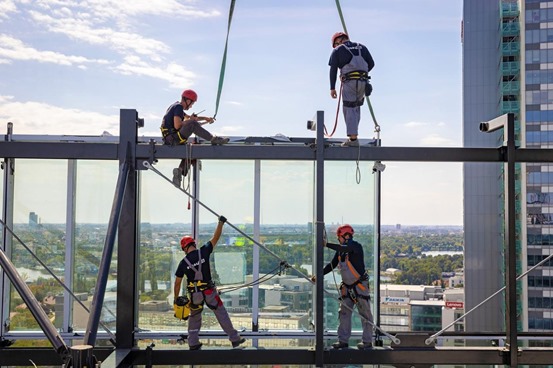
Personal fall arrest systems (PFAS) are vital for a good fall protection plan. They have a harness, lanyard, and anchor point. PFAS stop falls and keep workers from hitting the ground. They are used in many industries, like construction and roofing.
It’s important to know about the three types of fall protection systems. They help follow OSHA rules and keep the workplace safe. Using these systems can greatly lower the chance of falls and injuries.
Employers can greatly reduce fall hazards by using the 5 levels of fall protection hierarchy. OSHA recommends this approach. It makes sure you use the best ways to keep workers safe from falls.
Elimination or Substitution
The first step is to get rid of or change hazards when you can. This might mean changing how you do things or using different tools to avoid falls.
Passive Fall Protection
When you can’t get rid of hazards, use passive fall protection. This includes things like guardrails and covers. They work without needing workers to do anything.
Fall Restraint Systems
Fall restraint systems keep workers from getting too close to hazards. They stop workers from falling by holding them back.
Fall Arrest Systems
If a fall could happen, use fall arrest systems. They catch workers to lessen the fall’s impact. This includes things like harnesses and lanyards.
Administrative Controls
The last level is about rules and training. This includes teaching workers about safety and using warning signs. It helps workers know the risks and follow safety rules.
Knowing these 5 levels is key to understanding fall protection. By using them, you meet OSHA standards and make your workplace safer.
Level | Description | Examples |
1. Elimination or Substitution | Remove or alter the hazard | Change work processes, use different equipment |
2. Passive Fall Protection | Protect without worker intervention | Guardrails, covers |
3. Fall Restraint Systems | Prevent reaching the hazard | Restraint systems, tethers |
4. Fall Arrest Systems | Catch the worker in case of a fall | Personal fall arrest equipment, harnesses |
5. Administrative Controls | Training and safe practices | Safety training, warning signs |
By following the 5 levels of fall protection hierarchy, you can make a strong fall protection program. It meets OSHA standards and keeps your workers safe.
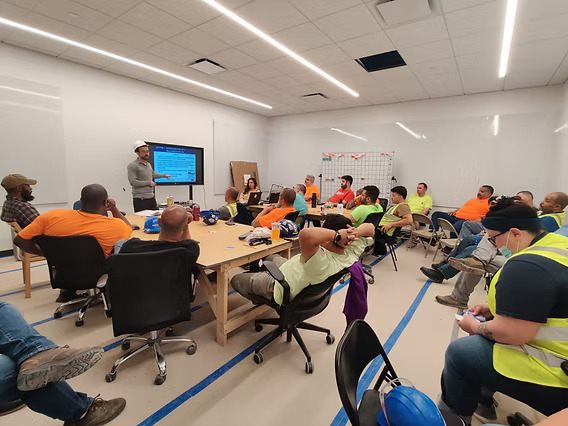
You need a detailed training plan that covers all fall protection aspects.
Developing a Comprehensive Training Curriculum
Your training plan should teach workers to spot hazards, check equipment, and use fall protection gear correctly. It should also teach rescue plans and emergency steps. This way, workers are ready for any situation.
Key components of a fall protection training curriculum:
Training Frequency and Retraining Requirements
OSHA says workers need fall protection training yearly. Or more often, if the job changes or if a worker doesn’t get it.
Training Frequency | Requirements |
Initial Training | Before working at heights |
Annual Retraining | At least once a year |
Additional Retraining | When there are changes in the workplace or if a worker demonstrates a lack of understanding |
Documentation and Record-Keeping Best Practices
Keeping accurate records is key to OSHA compliance. You should keep track of all training, including what was covered, who was there, and when.
Working at heights needs special safety steps. Different jobs have their own dangers. Knowing the safety rules for these jobs is key to staying safe.
When is fall protection required in the construction industry? OSHA requires fall protection on scaffolds that are over 10 feet in height. You can use guardrails, personal fall arrest systems, or other approved ways. It’s also important to make sure scaffolding is set up right and kept safe. Learn complete scaffold training.
Working on aerial lifts is risky. OSHA says you must use a personal fall arrest system when on these lifts. This means wearing a body harness to the lift’s anchor point. It’s also important to check the lift and safety gear often.
Roofing and edge work are hazardous. You need a fall protection plan with guardrails, safety nets, or personal fall arrest systems. It’s also important to train workers on how to use this gear.
Ladder safety is very important. Make sure ladders are stable, and you have three points of contact. For high tasks, think about using ladder safety systems or personal fall arrest systems.
By following these safety steps for different jobs, you can lower fall risks. This also helps you follow OSHA rules.
Understanding Personal Protective Equipment (PPE) is key to fall protection. PPE is a critical part of keeping you safe from falls. It’s the last defense when you’re working high up.
PPE stands for Personal Protective Equipment. It’s the gear you wear to stay safe from serious injuries at work. For fall protection, this includes harnesses, lanyards, and helmets.
What Are Five Commonly Used PPE Items for Fall Protection?
Full-body harnesses: Spread out the force of a fall across your body.
Lanyards: Link your harness to a secure point.
Self-retracting lifelines: Give you more room to move while keeping you safe.
Helmet: Keeps your head safe from impacts.
Fall arrest systems: These include harnesses, lanyards, and anchors for safety.
Choosing the right PPE means thinking about your work’s hazards. It’s also important to regularly check and maintain your PPE. Look for wear, damage, and make sure everything works right.
PPE is needed in construction when other safety steps can’t be taken. It’s vital for workers at heights or near edges. Free PPE training helps you use the gear correctly.
OSHA says employers must pay for PPE. They must also make sure it fits the work hazards.
Frequently Asked Questions:
Read more about PPE here.
Protect yourself and your crew by recognizing fall risks, using proper fall protection systems, inspecting PPE daily, and following OSHA safety rules on every job site. Proper training helps workers make safer decisions at heights and reduces the risk of serious injuries or fatalities. For more protection and security, learn more about Fall Protection in this complete OSHA 10 and OSHA 30 Guide.
Get OSHA Courses offers trusted OSHA 10 and OSHA 30 training programs that help construction workers and supervisors understand fall hazards, use equipment correctly, and stay OSHA-compliant. Invest in safety training today to build a safer, more compliant construction workplace tomorrow.

Now the question of When is fall protection required in the construction industry? Is clear to you, so it’s time for real implementation. Fall protection training and OSHA compliance are key to a safe workplace. By using good fall protection training, you can lower the chance of falls and injuries.
To keep up with rules, check and update your fall protection plans often. Make sure your workers get the right OSHA training. This includes learning about dangers, checking equipment, and using fall protection gear correctly.
What is fall protection training?
Fall protection training teaches workers about fall hazards. It shows how to use safety gear and how to rescue someone who has fallen.
At what height is fall protection required?
Fall protection is needed at different heights. In the general industry, it’s at 4 feet or more. In construction, it’s at 6 feet or more.
When is fall protection required in the construction industry?
In construction, fall protection is needed at 6 feet or more above a lower level.
What are the three types of fall protection?
The three types are guardrails, safety nets, and personal fall arrest systems.
What are the 5 levels of fall protection?
The levels are elimination, passive protection, fall restraint, fall arrest, and administrative controls.
What does PPE stand for?
PPE stands for Personal Protective Equipment.
What does PPE mean?
PPE means the gear worn to protect against hazards, like falls, at work.
Who is responsible for paying for PPE?
Employers usually pay for PPE, including fall protection gear.
What fall protection is required by OSHA when working on an aerial lift?
OSHA requires a personal fall arrest system for aerial lifts. This includes a harness and lanyard attached to the lift.
Fall protection must be provided for scaffolds over how many feet?
Fall protection is needed for scaffolds over 10 feet above a lower level.
What training is required for using PPE?
Workers need training to use, inspect, and maintain PPE, like fall protection gear.