
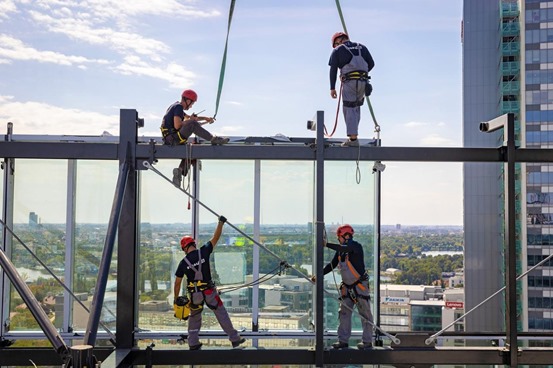
Construction sites are full of possible risks, so safety knowledge is king (or queen). So, who should take OSHA 10? Hold on tight; this might surprise you. OSHA 10-hour training is meant for construction and general industry newcomers. Such as construction workers, warehouse staff, and factory workers.
OSHA 10 is the backbone of individuals hunting down employment in industries. These industries have basic safety and health knowledge and are the lynchpin that prevents workplace injuries.
To understand this fully, we are venturing deeper into this article: who should take OSHA 10? What are the benefits, modules, completion process, and so on? Read on to find out!
OSHA 10 is the ultimate safety mani-pedi for your workday. They are the guardians of the workplace jungle, keeping things safe from risks. The training program requires newcomers to complete the OSHA 10-hour course with no supervisory roles. Job examples that required the OSHA 10-Hour training include;
OSHA requires a minimum of 10 total hours of training covering topics such as:
Listen up; this isn’t rocket science, but it’s vital. OSHA 10 training can help you stay safe and healthy. A worker may need to take both the 10-hour and 30-hour courses throughout one’s career, but not proximate. Keep in mind safety first; slay later.
OSHA 10 training is a crash course in workplace safety but way more engaging than your average bore. OSHA 10 offers numerous benefits, including;
But wait, there’s more! All these benefits introduce;
Moreover, OSHA 10 training is do or die for manufacturing, construction, and healthcare industries. On the other hand, it saves lives on workplace hazards and safety protocols. Also, OSHA 10 training provides workers with sector-specific expertise to prevent injuries and maintain a safe work environment.
So, level up your knowledge with OSHA 10 training! It’s an investment in yourself, your co-workers, and a workplace that rocks!
OSHA confirms everyone stays safe and sound. OSHA 10 certification is a mini safety school that provides newcomers with basic safety training to identify and avoid risks. Are you thinking about what the OSHA 10 Certification is good for? Here are some key benefits of OSHA 10 certification include;
OSHA 10 certification equips workers with essential safety knowledge, which helps companies avoid accidents and fines. Further, it’s often a condition for employment in high-risk industries.
Have you misplaced that important document and felt a cold dread creep in? Fear not, my friend! To look up your OSHA 10 Course, you can follow these steps;
Reclaim Your OSHA Card:
First, find your OSHA 10-hour Outreach Training Program card, containing your name and a unique card number.
Verify Your Card Online:
Visit the OSHA Card Portal. Enter your full name and card number as they appear on the card, then click the “Submit” button.
Check The Verification Results:
The portal will display the status of your card, including your name, card number, course details, and issue date. If your card is valid, it will be marked accordingly.
Contact Your Trainer or Online Provider:
Suppose you can’t verify your card online or have lost your card. In that case, you may need to contact your OSHA-authorized trainer or online training provider directly. They check your records to confirm course completion and issue a replacement card if you meet the five-year time requirement.
Check with The OSHA Education Center or Regional Office:
Do you still need help verifying your certification? Then, you can contact the OSHA Education Center, where your trainer completed the OSHA Trainer Course. The second option is your regional OSHA office; you can contact them for assistance. Remember always to verify the credibility of your OSHA training program or trainer. OSHA does not directly approve individual trainers or training programs.
The OSHA 10-Hour training for general industry courses typically consists of 9-12 modules, depending on the state;
In a nutshell, the OSHA 10-Hour General Industry courses have either 9 or 12 modules. The number of modules may differ slightly between different training providers.
Suppose your OSHA 10 certification is like that carton of milk in the back of the fridge – usable, then BAM! It’s Expired? No! Don’t worry. OSHA 10-hour training certifications do not expire; they are valid for life. Yet, as the certification does not expire, regular update sessions are needed. Thanks to future adaptions in OSHA regulations over time.
Are you worrying about getting bogged down in online training forever? Calm down because we’ll spill the tea on how long OSHA 10 online takes. Let’s be clear: completing the OSHA 10 online training requires at least 10 hours. The course is flexible, clearing the path to progress in your way. The deadline for this course is six months from the start date.
Furthermore, the final exam contains 20 questions and needs a qualifying score of 70% to pass. Only a maximum of three attempts are allowed. After completion, you can immediately download the certificate. You will receive a plastic OSHA DOL card within two weeks.
So, there you have it! OSHA 10 online might take a little longer than a Netflix binge, but the safety superpowers you gain are worth it.
OSHA 10 training is a valiant veil for workers; it’s like an array of skills to confidently steer workplace risks. Now, who should take OSHA 10? It’s handy for newcomers starting in construction and any other risky field.
Remember, even a tiny safety glitch can reserve you for weeks, and that’s no fun. So, take charge of your workday by becoming an OSHA 10-certified hero – your future self (and your wallet) will thank you!
OSHA 10 training is designed for entry-level workers who need basic workplace safety knowledge. It is commonly taken by construction workers, general laborers, warehouse employees, material handlers, factory workers, and other employees working in environments with workplace hazards.
Yes. OSHA 10 is useful for construction workers because it introduces important safety topics such as fall hazards, electrical safety, personal protective equipment, hazard communication, emergency procedures, and workers’ rights. It helps new workers understand common jobsite risks before starting work.
OSHA 10 General Industry training is helpful for workers in warehouses, manufacturing, healthcare, maintenance, logistics, and other non-construction workplaces. It is designed for employees who need basic safety awareness but do not have supervisory safety responsibilities.
OSHA 10 is not required for every worker under federal OSHA rules, but some employers, states, cities, unions, and job sites may require it. Many companies also prefer OSHA 10 because it shows that a worker has completed basic safety training.
Jobs that can benefit from OSHA 10 training include construction laborers, carpenters, electricians' helpers, warehouse associates, package handlers, machine operators, maintenance workers, and manufacturing employees. It is especially useful for workers starting in higher-risk industries.
OSHA 10 training covers basic workplace safety topics such as an introduction to OSHA, workers’ rights, employer responsibilities, fall protection, personal protective equipment, hazard communication, electrical safety, emergency action plans, and common workplace hazards.
OSHA 10 is usually better for entry-level workers. Supervisors, foremen, managers, and safety coordinators usually benefit more from OSHA 30 because it provides deeper safety training and covers more responsibilities related to hazard prevention and workplace safety.
Yes. OSHA 10 can be completed online through an OSHA-authorized online Outreach training provider. Online training allows workers to complete the course at their own pace and receive proof of completion after successfully finishing the course.
The OSHA 10 card does not expire under federal OSHA rules. However, some employers, states, unions, or job sites may require workers to retake OSHA 10 after a certain number of years to keep their safety knowledge updated.
Choose OSHA 10 if you are an entry-level worker who needs basic safety training. Choose OSHA 30 if you are a supervisor, foreman, site manager, safety coordinator, or worker with greater responsibility for workplace safety.
Recent Posts
