
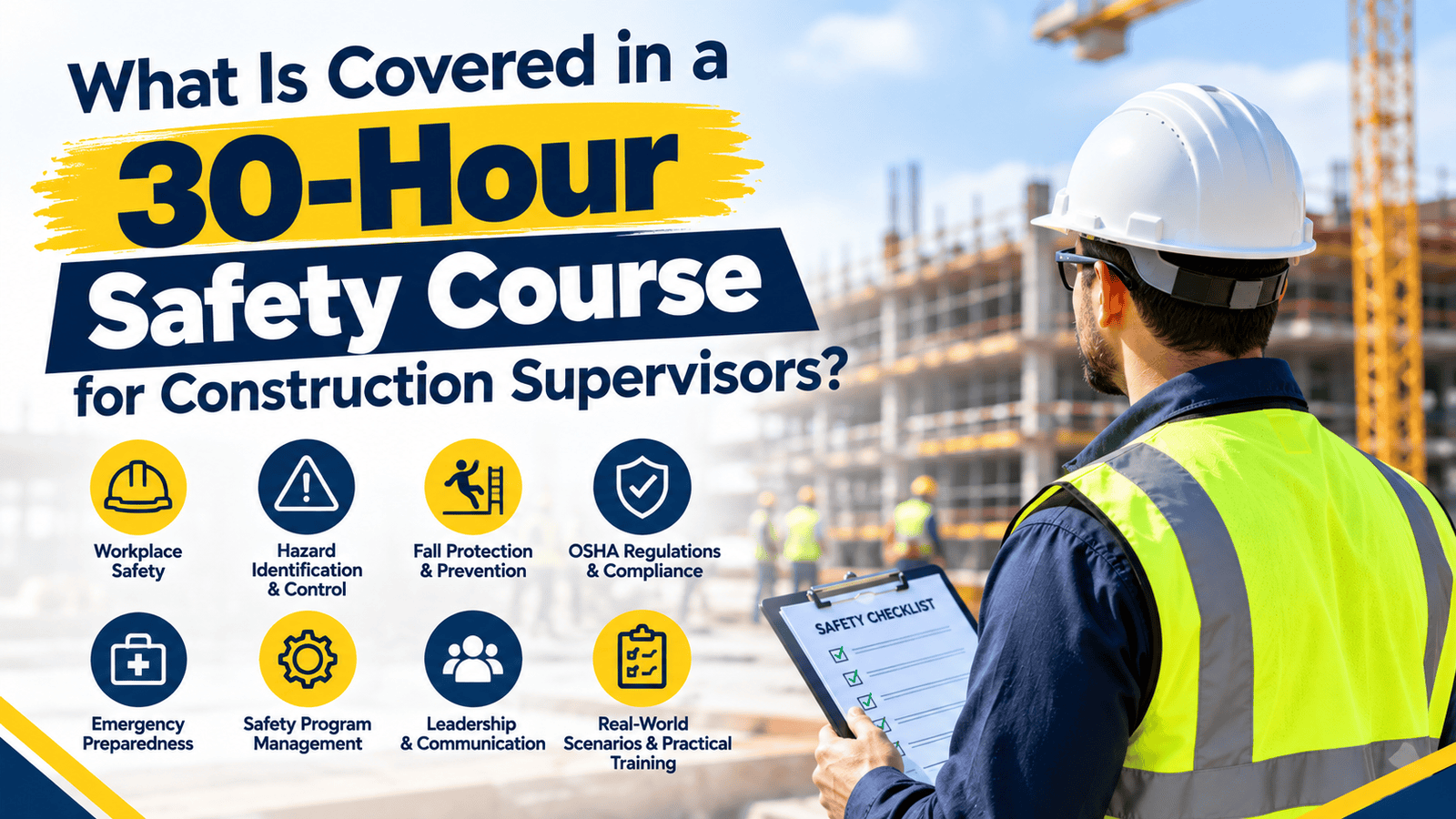
Construction sites carry some of the highest injury risks of any workplace, which is why supervisors and foremen are expected to complete an in-depth, construction-specific 30-Hour safety course before taking on crew oversight responsibilities. This article breaks down exactly what the construction track covers and why each module matters on an active job site.
Who This Course Is Built For
The construction-focused curriculum is designed for people who are directly responsible for job site safety, including:
- Construction supervisors and foremen
- Site safety officers and safety coordinators
- Project managers overseeing subcontractors
- Workers preparing for a supervisory promotion
Core Curriculum: The Focus Four Hazards
The largest portion of the course is dedicated to the four hazard categories responsible for the majority of construction fatalities:
- Falls guardrails, personal fall arrest systems, and ladder and scaffold safety
- Struck-by hazards vehicle traffic, falling objects, and crane operations
- Caught-in or caught-between hazards trenching, excavation, and equipment
- Electrocution overhead power lines, temporary wiring, and lockout/tagout
Supervisors learn not just how to recognize these hazards, but how to build controls into daily site operations and hold crews accountable to them.

Additional Required Topics
- Personal protective equipment (PPE) selection and enforcement
- Scaffolding erection and inspection standards
- Excavation and trenching protective systems
- Materials handling, storage, and rigging
- Fire prevention and emergency response planning
- Recordkeeping and incident reporting obligations
Elective Modules
Beyond the mandatory core, most providers offer elective hours that let supervisors tailor the course to their specific site conditions common choices include crane and rigging safety, confined space entry, steel erection, and stairway and ladder safety.

How This Differs From the General Industry Track
The construction curriculum is built entirely around job site conditions: temporary structures, heavy equipment, changing site layouts, and outdoor hazards. The general industry version instead focuses on fixed facilities such as warehouses and manufacturing plants, with different priorities like machine guarding and walking-working surfaces. If you’re unsure which track applies to your role, our complete guide for supervisors and safety leaders compares both tracks side by side.
Certification and Renewal
Upon completion, supervisors receive an official completion card confirming they’ve met the training requirement. The card does not expire, but many employers and project owners require refresher training every few years to keep supervisors current on updated standards and best practices.
Final Thoughts
For construction supervisors, this course isn’t just a compliance checkbox it’s the foundation for identifying hazards before they cause injuries and building a genuine safety culture on site.
Explore the construction-specific course and enroll today.
Frequently Asked Questions
What makes the construction track different from other safety courses?
It’s built entirely around job site conditions temporary structures, changing site layouts, heavy equipment, and outdoor hazards rather than the fixed-facility hazards covered in the general industry track.
Is this course required for every construction supervisor?
Many general contractors and project owners specifically require site supervisors and foremen to hold this credential before they’re allowed to oversee a crew, though exact requirements vary by employer and project.
What are the Focus Four hazards covered in the course?
Falls, struck-by hazards, caught-in or caught-between hazards, and electrocution these four categories account for the majority of construction fatalities and receive the most instructional time.
How often should supervisors renew this training?
The completion card doesn’t expire, but most employers recommend refresher training every few years to keep supervisors current on updated standards and site practices.